Nuclear survival kit list for home, car and work
A nuclear survival kit is mostly an ordinary emergency kit: water, food that needs no cooking, a battery or hand-crank radio, lights, first aid and medication. The items specific to fallout are simple ones: a change of clothes stored indoors, heavy-duty rubbish bags, plastic sheeting and tape, dust masks, wet wipes and soap.
You don't need a bunker, and the same supplies also cover storms and power cuts. This page is general information, not official advice; instructions from your local authorities always come first.
How much do I need, and for how long?
- Water: one gallon (about 4 litres) per person per day, for drinking and basic hygiene.
- Duration: the American Red Cross recommends two weeks of supplies at home and three days in an evacuation kit. Ready.gov's minimum is "several days".
Fallout sheltering usually lasts at least a day, but power, water and shops can be disrupted much longer. The book therefore uses 14 days as the home target. For a family of four that is 56 gallons (about 212 litres) of water. A smaller start is a 72-hour kit.
What goes in the home kit?
Water and food
- Water for 14 days, commercially bottled or in food-grade containers, plus extra for pets
- Non-perishable food that needs no cooking and little water, such as canned meat, fish, beans and soup, peanut butter, crackers, dried fruit, nuts and energy bars
- A manual can opener
- Infant formula, baby food and pet food if needed
Information and power
- A battery-powered or hand-crank radio, the most important item after water
- A torch or lantern for every person, with spare batteries
- Phone chargers and charged power banks
- Paper copies of phone numbers and your family plan, and paper local maps
Fallout-specific supplies
- A full change of clothes per person, stored inside
- Heavy-duty rubbish bags for contaminated clothing
- Plastic sheeting, duct tape and scissors for sealing broken windows and vents
- Dust masks or N95 respirators for everyone
- Moist towelettes or unscented baby wipes
- Soap and shampoo
Health and hygiene
- A first aid kit with plenty of bandages and gauze, tweezers, antiseptic and burn dressings
- 14 days of prescription medication, with copies of prescriptions
- Everyday non-prescription medicines, such as pain relievers
- Glasses, hearing-aid batteries, nappies and personal hygiene items
Sanitation
- A bucket with a tight lid, heavy-duty bags, and cat litter or sawdust, in case toilets stop working
- Unscented household bleach, toilet paper and rubbish bags
Tools, comfort and documents
- A wrench or pliers to turn off gas and water, and a fire extinguisher
- A battery-powered carbon monoxide alarm, a whistle, and matches in a waterproof container
- A sleeping bag or warm blanket for each person, and clothing for the season
- Cash in small notes, and copies of ID, insurance and medical documents in a waterproof bag
What goes in a go-bag?
You can't predict where you will be, so keep a small bag in the car and at your workplace.
- Water, at least three bottles, and energy bars
- Two or three N95 or dust masks
- A spare shirt, trousers and socks in a sealed bag
- Two large rubbish bags, for contaminated clothes or as an improvised poncho
- A pack of wet wipes and a small first aid kit
- Three days of essential medication
- A small torch, a power bank and a phone cable
- A small AM/FM radio
- A paper copy of family contacts and your meeting plan, and some cash
A car is not a shelter, so the bag is for carrying into a building; see what to do if you are driving.
Do I need potassium iodide or a radiation detector?
Neither is essential.
Potassium iodide only protects the thyroid from radioactive iodine and offers little help after a weapon detonation. If you keep it, take it only when officials tell you to. More in potassium iodide and other myths.
A dosimeter or survey meter lets you measure radiation yourself. Quality instruments are expensive and cheap ones can be inaccurate. Official broadcasts remain your main guide to when it is safe to go out.
How do I keep the kit ready?
- Every 6 months: replace water you stored yourself, recharge power banks, and check torches and the radio.
- Every year: replace expired food, medication and batteries, and update documents and contacts.
A kit works best with a plan. Agree in advance that everyone shelters where they are and nobody goes out to collect anyone during the first 24 hours. Choose your shelter spot now.
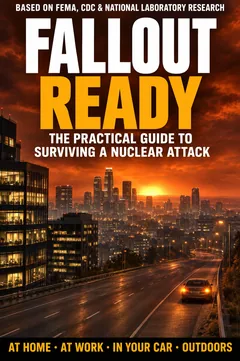
The book Fallout Ready has the full stockpiling chapter and a printable checklist with quantities for a family of four.
Sources
- Ready.gov: Build a Kit
- Ready.gov: Radiation Emergencies
- American Red Cross: Survival Kit Supplies
- CDC: How to Self-Decontaminate after a Radiation Emergency
- CDC: Potassium Iodide (KI)
- CDC: Carbon Monoxide Poisoning - Prevention
Questions
What should be in a nuclear survival kit?
Water at one gallon (about 4 litres) per person per day, non-perishable food that needs no cooking, a battery or hand-crank radio, torches and batteries, a first aid kit and prescription medication. For fallout, add a change of clothes stored indoors, heavy-duty rubbish bags, plastic sheeting and duct tape, dust masks, wet wipes and soap.
How much water should I store for a nuclear emergency?
Plan on one gallon, about 4 litres, per person per day for drinking and basic hygiene. For a family of four over 14 days that comes to 56 gallons, or about 212 litres. Store extra for pets.
Do I need a radiation detector?
No, a dosimeter or survey meter is optional. Good instruments are expensive, cheap ones can be inaccurate, and official broadcasts remain the main guide to when it is safe to go out.